
Key Takeaways:
- Economic factors, including rising mortgage rates and home prices, are impacting homeownership rates.
- Climate change is influencing homeowners’ relocation decisions.
- Millennials and Gen Z are reshaping the housing market with new preferences and priorities.
Homeownership in the United States is undergoing significant transformations, influenced by economic shifts, climate concerns, and evolving generational preferences. Understanding these trends is crucial for prospective buyers, sellers, and industry professionals. For those navigating these changes, Lake Kiowa real estate experts Lake & Country Realty offer invaluable insights and services. Specializing in residential, lake, farm, and ranch, and investment properties in North Texas and southern Oklahoma, their team combines local knowledge with professional excellence to help clients find properties that align with their lifestyles and dreams.
Table of Contents
Economic Factors Impacting Homeownership
Recent data indicate a decline in the U.S. homeownership rate, marking the first decrease since 2016. In the second quarter of 2025, the number of homeowner households fell by 0.1% year over year to 86.2 million, while renter households increased by 2.6% to 46.4 million. This shift is attributed to rising home prices, higher mortgage rates, and economic uncertainty, making homeownership less accessible for many Americans.
The tightening of lending standards has also played a role, with many financial institutions increasing down payment requirements and scrutinizing debt-to-income ratios more carefully. Additionally, inflationary pressures have raised the costs of construction materials, making it more expensive to build new homes and exacerbating inventory shortages. As a result, more first-time homebuyers, especially in high-cost urban areas, face greater challenges entering the market or upgrading from starter homes to larger residences that accommodate growing families. These factors have contributed to a widening gap between those who already own homes and those who are struggling to enter the market.
Climate Concerns Driving Relocation
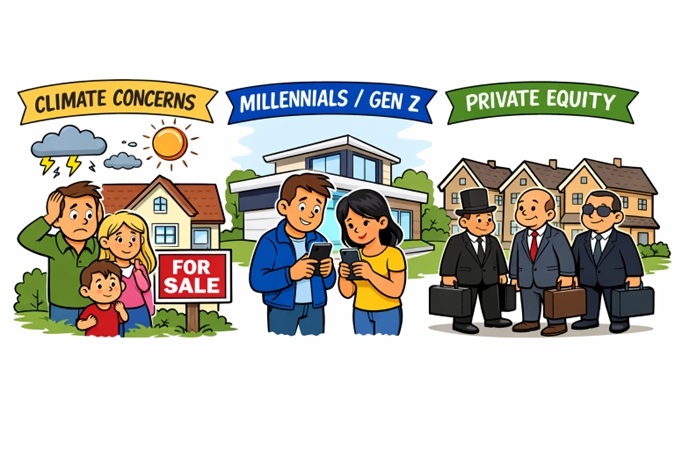
Climate change is increasingly influencing homeowners’ decisions to relocate. A 2026 report revealed that nearly half (49%) of American homeowners are considering moving due to climate-related concerns. Additionally, 93% anticipate that extreme weather events will damage their homes in the next 3 years. These concerns are prompting many to seek residences in areas perceived as less vulnerable to climate impacts.
Areas affected by frequent hurricanes, wildfires, or flooding have already seen population shifts, with some homeowners opting to sell and move to regions considered climate-resilient. This has spurred new interest in inland areas and smaller cities that were previously overlooked. Insurance costs have also surged in high-risk regions, making it more difficult, and in some cases impossible, for some owners to secure affordable property insurance. For buyers, research into local climate risks, disaster preparedness, and environmental regulations has become an integral part of the home search. Developers, too, are adjusting by prioritizing resilient building techniques and sustainable designs that offer better protection against extreme weather, further influencing buyers’ perceptions and choices.
Generational Shifts In Homebuying
Millennials and Gen Z are redefining homeownership with distinct preferences and financial strategies. Millennials, born between 1981 and 1996, now represent the majority of homebuyers, while Gen Z, born after 1997, is entering the market. Both generations prioritize flexibility, digital connectivity, and financial transparency, viewing homeownership as a long-term goal. Their approach is reshaping the real estate market, emphasizing sustainable living and technological integration.
Moreover, younger generations are leveraging digital resources and social media for property searches, online mortgage pre-approvals, and virtual home tours, expediting the buying process. They favor energy-efficient homes, smart home technologies, and walkable communities with access to amenities such as co-working spaces and public transit. Many millennials, burdened by student loan debt and high living costs, are exploring alternative financing options, such as co-buying with friends or family. Gen Z buyers, meanwhile, show a willingness to purchase fixer-uppers as long-term investments, indicating a pragmatic yet hopeful approach to entering the property market. This evolution is pushing the industry toward greater transparency, innovation, and customer-centric models.
Rising Homeownership Tenure
Homeowners are staying in their properties longer than ever before. In the Philadelphia metro area, the average homeownership tenure reached 9.5 years by the end of 2025, surpassing the national average of 8.6 years. This trend contributes to a stagnant housing market, characterized by tight inventory and high home prices. The extended tenure reflects homeowners’ reluctance to sell amid economic uncertainties and rising relocation costs.
Longer homeownership tenure reduces turnover, putting more pressure on the already limited housing inventory. Many homeowners are locked into lower mortgage rates from previous years, making them hesitant to move and take on higher interest payments. Additionally, as more people age in place, fewer homes are available for younger buyers. This dynamic is prompting cities and developers to explore solutions like accessory dwelling units (ADUs), multi-generational living spaces, and renovations that accommodate aging residents. The trend also suggests that prospective buyers must be prepared for more competitive bidding situations and may need to expand their search parameters or reconsider housing types to find suitable options.
The Role Of Private Equity In Housing
Private equity firms are increasingly investing in residential real estate, impacting housing availability and affordability. These investors often outcompete individual buyers, particularly in low-income neighborhoods, exacerbating racial wealth gaps and limiting homeownership opportunities for working-class families. Corporate landlords are more likely to pursue evictions and neglect property maintenance, raising concerns about the long-term effects on communities.
The growing presence of institutional investors in the single-family rental market has raised questions about policy and regulation. While some argue that these investors bring stability and efficiency to the rental market, others point to aggressive rent hikes, reduced tenant protections, and community displacement. Municipalities and advocacy groups are pushing for policies to limit large-scale investor activity, promote first-time homebuyer programs, and protect vulnerable communities from speculative practices. The outcome of these debates could have far-reaching consequences for housing affordability and equitable access in the years ahead.
Strategies For Navigating The Changing Market
Given these evolving trends, prospective homebuyers and sellers can consider the following strategies:
- Stay Informed: Keep abreast of economic indicators, climate reports, and market analyses to make informed decisions.
- Financial Planning: Assess financial readiness, considering potential increases in mortgage rates and home prices.
- Location Analysis: Evaluate areas for climate resilience, economic stability, and community development.
- Professional Guidance: Consult with real estate professionals who understand the local market dynamics and can provide tailored advice.
In addition, it is valuable for buyers and sellers to leverage technology throughout the real estate process. Tools such as virtual tours, remote notarization, digital signatures, and online listing platforms enable smoother, faster transactions, especially for long-distance moves or competitive markets. Engaging with local community organizations can also help identify neighborhoods with strong social connections and investment potential. For sellers, understanding buyer preferences, especially regarding sustainability and smart home features, can help position a property more effectively and maximize value.
Final Thoughts
Understanding these changing homeownership trends is essential for making informed decisions in today’s dynamic real estate landscape. Whether you are entering the market for the first time, considering relocation for climate resilience, or adapting to rising tenure norms, support from knowledgeable professionals and access to accurate data can empower you to achieve your real estate goals amidst an ever-evolving housing environment.




No Comments