
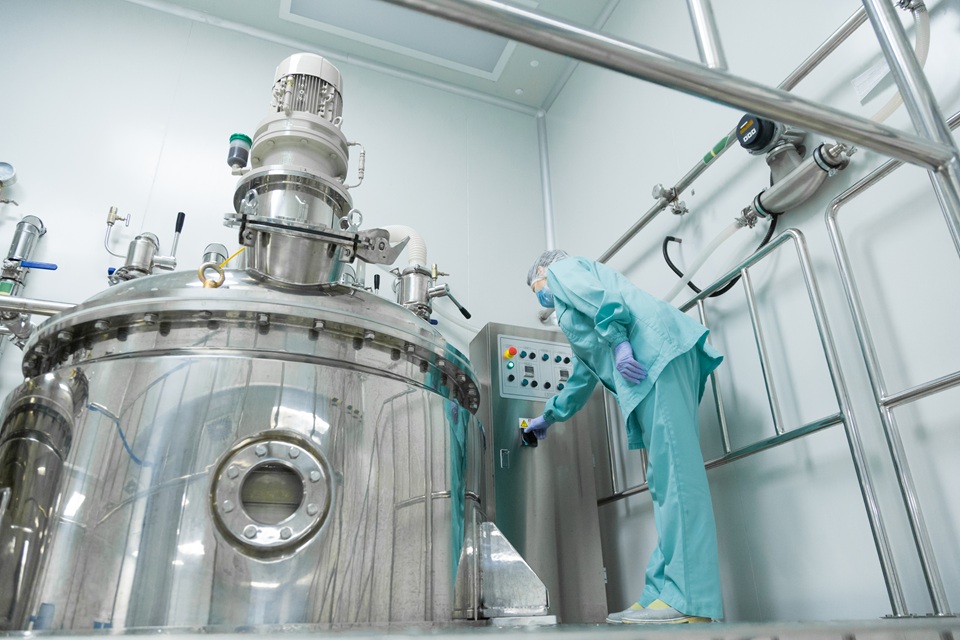
- Industrial drum mixers are essential for achieving uniform product quality across various manufacturing sectors.
- Advancements in automation and IoT integration have enhanced the efficiency and consistency of mixing processes.
- Energy-efficient designs and smart control systems contribute to sustainable manufacturing practices.
Table of Contents
The Role Of Industrial Drum Mixers In Manufacturing
Industrial drum mixers are vital components in today’s manufacturing environments, playing a central role in blending raw materials into homogeneous mixtures that are crucial for downstream processes. Whether in food processing, pharmaceuticals, chemical production, or construction, the drive for quality and reliability hinges on the flawless operation of these machines. In a landscape where minor inconsistencies can derail product batches or expose manufacturers to costly recalls, the choice of equipment and manufacturer, such as a trusted industrial drum mixer manufacturer, becomes a strategic priority for production managers.
Uniform mixing underpins product safety, regulatory compliance, and the satisfaction of customer expectations. As markets grow more competitive and consumer demand becomes more stringent, companies must ensure their blending operations can deliver consistency at scale while adapting to ingredient variability and changing production requirements. Advances in machinery design, intelligent controls, and integrated monitoring systems are rapidly transforming how these critical processes are managed and executed.
Advancements In Mixer Technology
Technological innovation, particularly through intelligent automation, is transforming industrial drum mixers. Advanced sensors and AI enable real-time, dynamic process control, optimizing parameters such as rotational speed and mixing intensity to achieve consistent product quality. This self-learning system decreases waste and energy consumption while increasing throughput. Next-generation mixers feature energy-efficient motors and AI-driven designs that optimize fluid dynamics, ensuring minimal energy waste while helping manufacturers meet their sustainability goals.
Energy recovery systems are increasingly common in newer installations, reclaiming heat or rotational energy for use elsewhere in the plant. The move toward eco-friendly lubricants and recyclable materials in mixer construction further underscores the industry’s commitment to green manufacturing practices.
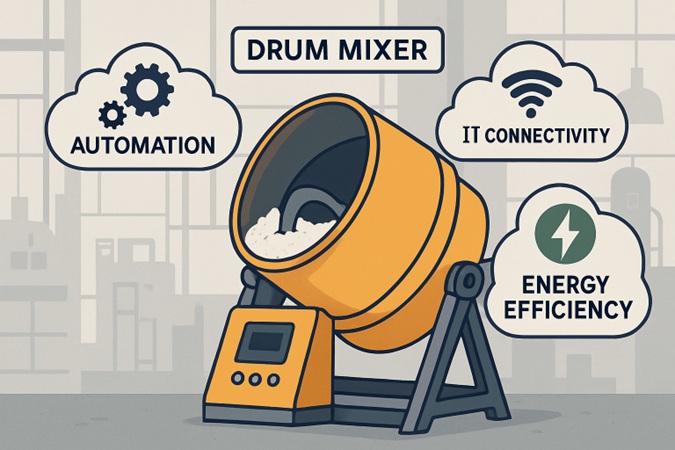
Customization & Modular Designs
Flexibility is becoming a hallmark feature of contemporary drum mixers. Modular architectures allow manufacturers to quickly reconfigure equipment, such as switching impellers or adjusting shaft lengths, in response to changing product specifications or batch sizes. This agility is particularly valuable in sectors with frequent product changeovers, high-mix-low-volume manufacturing, or evolving customer demands.
Custom-designed solutions ensure the unique needs of each application are met, reducing downtime and enhancing operational efficiency. As manufacturers face increasingly specialized production runs, this adaptability provides a critical edge, supporting both cost efficiency and tailored product development.
Automation & IoT Integration
Integrating industrial drum mixers with the Internet of Things (IoT) and advanced automation has driven the evolution toward smart, connected operations. IoT-enabled mixers provide real-time monitoring and remote diagnostics, alerting maintenance teams to issues before they escalate and reducing unplanned downtime. Automated maintenance routines and remote support capabilities streamline the upkeep of complex systems, driving further efficiencies.
The collection and analysis of operational data enable predictive maintenance, performance optimization, and comprehensive process traceability. These connected systems not only maximize utilization but also fortify compliance efforts—supporting documentation and record-keeping mandates enforced by regulatory agencies. For further reading on the impact of IoT in industrial applications, consult the IoT in Manufacturing. As more manufacturers adopt connected technologies, the ability to integrate mixers into larger smart-factory ecosystems becomes a key competitive advantage. Ultimately, IoT-driven insights empower decision-makers to optimize production, reduce costs, and improve product quality across the board.
Ensuring Product Quality & Compliance
Modern drum mixers are increasingly equipped with AI-driven quality assurance tools, capable of real-time assessment for parameters such as homogeneity, particle size, and color. These systems immediately detect and correct inconsistencies, preventing defective products from reaching subsequent stages or the end customer. Predictive models informed by robust batch data enable manufacturers to identify potential quality issues before they occur, allowing them to proactively maintain compliance and build customer trust.
Future Trends In Industrial Mixing
The next generation of industrial mixing equipment is poised to deliver even greater levels of automation, energy performance, and customization. Research and development are accelerating the creation of mixers that are not only more adaptable and efficient but also easier to maintain, integrate, and scale. The ongoing integration of machine learning, IoT connectivity, and sustainable materials will shape the future landscape, enabling businesses to respond to global demands for improved quality, lower costs, and reduced environmental impact.
Industrial drum mixers have become an integral part of modern manufacturing. By embracing technological advances and leveraging smart design, companies can achieve new benchmarks in mixing consistency, operational excellence, and sustainability—fortifying their competitive position in an ever-evolving industry landscape.





No Comments