
Key Takeaways:
- Recycling scrap metal conserves natural resources and reduces environmental impact.
- Innovative technologies and creative applications are transforming the scrap metal recycling industry.
- Individuals and industries can contribute to sustainability by adopting these recycling methods.
As concerns about sustainability and waste continue to rise, recycling scrap metal offers both environmental and economic benefits. Beyond simply sending materials for industrial processing, there are numerous inventive ways to use discarded metal. When you consider what can metal be used for, the answer extends far beyond traditional recycling bins. Exploring advanced methods and creative applications not only saves resources but also limits landfill waste and gives new purpose to materials that would otherwise be discarded.
The realm of scrap metal recycling merges environmental responsibility with technological and artistic ingenuity. Whether adopted by individuals, farms, or entire cities, these methods showcase how innovation meets necessity. More companies and communities are embracing unique approaches that conserve resources, create new products, and even support the arts. As these alternatives gain momentum, they set a powerful precedent for future waste management and sustainable living.
Recycling scrap metal also helps decrease dependence on raw ore extraction, which can have significant ecological impacts. Furthermore, the range of uses for recycled metals continues to expand as manufacturers, inventors, and artists discover additional value in what many consider trash. Integrating these practices into larger waste management strategies has both immediate and long-reaching benefits for economies and ecosystems alike.
This article will delve into the most innovative and effective strategies to recycle scrap metal, from cutting-edge technology to hands-on creative reuse. By understanding these approaches, industries and individuals alike can take actionable steps toward sustainability and resource conservation.
Table of Contents
Urban Mining: Transforming Cities Into Resource Hubs
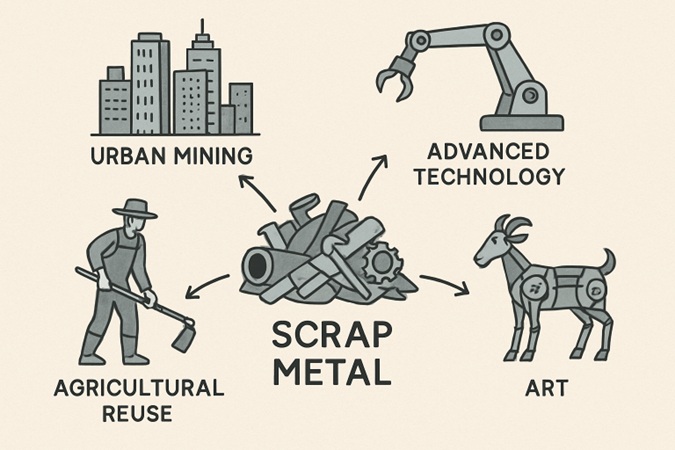
Urban mining transforms cities into resource hubs by recovering valuable metals from existing infrastructure, defunct machinery, and electronic waste. Rather than depending on conventional mining, materials are sourced from decommissioned electronics, buildings, and vehicles. For example, in Taiwan, companies like Solar Applied Materials Technology Corporation source up to 80 percent of their raw input from recycled waste, which not only supports environmental efforts but also addresses concerns over global material shortages. Urban mining is emerging as a crucial solution in the shift toward a circular economy, helping cities sustainably manage their own resource cycles. For more insight into the scope and advancements of urban mining, National Geographic offers an in-depth look at e-waste.
Advanced Technologies Enhancing Metal Recycling
Game-changing technologies are streamlining the scrap metal recycling process in unprecedented ways. Artificial intelligence (AI) and big data analytics now help recyclers predict metal market trends, making it easier to manage inventory and optimize operations. Collaborative robotics, known as cobots, safely assist in sorting and processing materials, significantly improving efficiency while reducing accidents. Meanwhile, advancements in 3D printing now allow recycled metals to be converted into filaments or powders suitable for rapid prototyping and manufacturing, minimizing waste while creating valuable new products. These innovations are elevating the recycling sector’s capacity to meet rising global material demands. Additional information on these technologies can be found at Reuters’ report on robotics and AI in recycling.
Creative Reuse Of Scrap Metal In Art & Design
The creative sector is redefining scrap metal’s role through art, design, and architecture. Metal waste can be transformed into sculptures, installations, public art, and functional decor. Ferrous steel from scrapyards, for example, can be transformed into elegant wall panels or intricate outdoor features, lending an industrial flair to modern spaces. This practice not only saves the energy required for reprocessing metal but also keeps discarded materials in circulation, often becoming the focal point of green building projects or public exhibitions. For instance, artists like Brian Mock create life-size animal sculptures from reclaimed materials, showcasing the potential of scrap metal in art.
Practical Applications Of Scrap Metal In Agriculture
Farmers are also finding resourceful ways to repurpose scrap metal, saving money while enhancing efficiency. Repurposed bed springs can be mounted on barn walls to hold tools, and sturdy metal pipes or rods can be bent into custom tool cradles. Containers or barrels that are no longer useful for transport can become robust livestock feeders or feed troughs, withstanding weather and constant use far better than many plastic alternatives. These practical solutions prevent needless waste and promote a circular use of materials in farming operations.
Solid Phase Manufacturing: Upcycling Metal Scrap
Researchers have introduced innovative techniques, such as solid-phase alloying, to transform low-value aluminum scrap into high-performance alloys. Instead of relying on traditional smelting, processes like Shear Assisted Processing and Extrusion (ShAPE) blend aluminum scrap with other metals to produce high-strength materials rapidly and at lower temperatures. This technology offers the dual advantage of reducing both production costs and the substantial energy typically required for metal fabrication. By upcycling rather than melting, manufacturers also decrease greenhouse gas emissions and minimize resource consumption. For a detailed look at this technology and its impact on the industry, visit Scientific American.
Recyclable 3D-Printed Electronics
Recent advancements in electronics manufacturing now enable the full recyclability of printed circuit board assemblies (PCBAs) using water-soluble substrates and liquid metal conductors. Once a device reaches the end of its life, the substrate can be dissolved in water, enabling easy recovery of both circuits and components. This innovation dramatically simplifies the recycling of electronic devices and curbs the e-waste problem, which has become a major international concern. It paves the way for more sustainable electronics design and manufacturing in the years to come.
Conclusion
The pursuit of sustainability has led to a renaissance in the way society handles scrap metal, uncovering numerous inventive methods that combine environmental responsibility, economic efficiency, and creativity. From urban mining and technological breakthroughs to inspired art and practical agriculture, these approaches help to reshape industries and communities alike. By integrating and scaling these innovative recycling strategies, we create a future where resources are maximized, waste is minimized, and the benefits of a circular economy become a reality for all.




No Comments