

Key Takeaways:
- Document existing equipment, operating conditions, and critical loads before planning an upgrade.
- Measure actual demand instead of relying only on nameplate ratings.
- Leave capacity for realistic expansion, maintenance access, and future connections.
- Address power quality, grounding, protective devices, and arc-flash risks early.
- Treat preventive maintenance, testing, and recordkeeping as core reliability tasks.
Reliable industrial electrical systems begin with a plan that connects production requirements, worker safety, maintenance needs, and future growth. Reviewing the available electrical equipment is one useful starting point, but a dependable system also requires accurate load data, current drawings, protective settings, and clear operating procedures.
In 2026, facilities are often adding automation, digital controls, larger process loads, and electrified equipment to systems that may already be decades old. A brief interruption can create much more than lost production time. It can damage materials, stop critical processes, affect product quality, and delay shipments.
Table of Contents
Why Electrical Planning Matters
Electrical planning should support the facility’s present work without forcing every future improvement into an emergency project. Motors, drives, heaters, compressors, robotic cells, servers, and control networks can place different demands on distribution equipment. When capacity and protection are not evaluated together, facilities may experience nuisance trips, overheating, unstable voltage, or difficult troubleshooting.
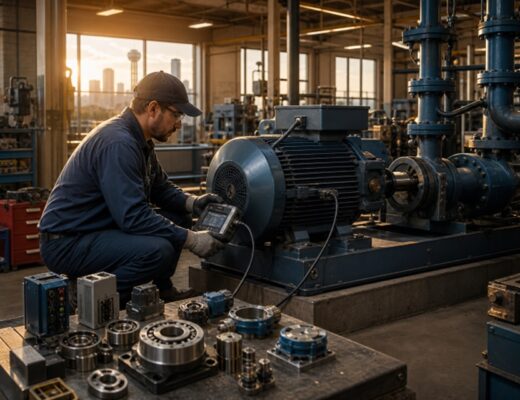
Planning is especially important when a process relies on an electric motor for pumping, conveying, ventilation, mixing, or production movement. Motor starting current, duty cycle, control method, and process importance can all affect feeder sizing, voltage performance, and backup-power priorities.
Begin With A Complete Facility Review
Create an equipment inventory that includes service entrances, transformers, switchgear, panelboards, motor control centers, variable-frequency drives, generators, batteries, and major process loads. Gather single-line diagrams, panel schedules, maintenance logs, protective-device settings, and outage reports. Then compare those records with actual field conditions. A drawing that does not reflect past modifications can lead to unsafe assumptions and poor design decisions.
Interview operations, maintenance, and safety personnel as part of the review. Ask which loads are essential to worker safety, which systems create the largest production bottlenecks, and which equipment has a history of overheating or failure. This helps distinguish truly critical loads from equipment that can shut down safely during a disruption.
Measure Present & Future Loads
Nameplate information is useful, but it does not show how a facility behaves during peak production. Measure demand across normal and high-load periods, including motor starts, heating cycles, compressor operation, process changes, and building loads. Record voltage, current, demand, and operating patterns where practical.
Include known changes in the forecast, such as added shifts, larger machinery, warehouse expansion, charging infrastructure, automation, or revised production targets. Spare capacity should be intentional rather than arbitrary. The goal is to avoid designing a system that operates at its limit while preventing unnecessary oversizing.
Check Power Quality Before Selecting Equipment
Voltage dips, transients, phase imbalance, harmonics, and poor power factor can disrupt sensitive controls and reduce equipment life. A production line may appear adequately sized on paper, but still fault repeatedly because drives and sensors encounter unstable power during a large motor start.
Temporary monitoring should cover several production cycles, not only idle periods. Results can help identify whether the right response is improved grounding, load balancing, surge protection, harmonic filtering, separate feeders, or changes to control settings. Reviewing workplace electrical hazards also helps teams recognize why insulation, guarding, grounding, and protective devices matter in system design.
Build Safety Into The Design
Safety decisions should be made before layouts, work procedures, and equipment locations are finalized. Review grounding and bonding paths, overcurrent protection, disconnecting means, emergency shutdowns, equipment labels, required clearances, and access for inspection. Consider how changes in transformers, feeders, or protective devices may affect available fault current and arc-flash conditions.
Only qualified personnel should inspect energized equipment or conduct electrical testing. Electrical hazards can cause shock, fires, and explosions, as explained by the Occupational Safety and Health Administration, reinforcing the need for controlled work practices and clear maintenance procedures.
Plan Maintenance, Testing, & Records
Reliability depends on planned care, not just fast emergency repair. A practical maintenance program assigns tasks, intervals, responsible personnel, and recordkeeping requirements. Useful activities include:
- Visual inspections for damage, contamination, heat discoloration, and loose parts.
- Thermal scans and connection checks were appropriate.
- Breaker, relay, grounding, and insulation testing.
- Cleaning and environmental checks for dust, moisture, vibration, and temperature.
- Power-quality monitoring when recurring faults or sensitive loads are present.
Dated records reveal recurring failures, declining equipment condition, and weak points that may not be obvious during a single inspection. Maintenance guidance and applicable standards should be reviewed with qualified electrical professionals when establishing site-specific procedures.
Select Equipment For The Full Operating Environment
Purchase price alone is not a reliable selection method. Evaluate each option against the facility’s voltage, available fault current, duty cycle, ambient temperature, dust, moisture, corrosion exposure, space limitations, service access, replacement-part availability, and expected service life.
A useful comparison process asks:
- Capacity: Can it serve current loads and planned additions?
- Environment: Is it suitable for heat, moisture, dust, vibration, or corrosive conditions?
- Maintenance: Can technicians inspect, isolate, test, and service it safely?
- Expansion: Are there practical spare spaces, pathways, and connection points?
Prepare For Backup Power & Resilience
Backup power should follow a defined risk plan. Identify the loads that must continue operating, the loads that require an orderly shutdown, and the loads that can remain off until utility power returns. Depending on the risk, options may include generators, batteries, alternate feeders, automatic transfer equipment, and selective load shedding.
Test backup systems under realistic conditions. Confirm fuel availability, ventilation, battery condition, transfer time, operating instructions, and staff responsibilities. A backup source is only useful if it performs as expected when normal power is unavailable.
Use A Phased Upgrade Plan
Many industrial facilities cannot replace every aging component at once. Rank projects by safety risk, failure history, production impact, code concerns, lead times, and budget. A simple phased plan can include immediate correction of unsafe conditions and recurring failures, near-term replacement of aging or undersized equipment, and long-term preparation for expansion and electrification.
Schedule cutovers during planned outages, weekends, or lower-production windows where possible. Temporary power, staged feeder transfers, and advance testing can reduce disruption while allowing teams to verify each phase before proceeding.
Account For Growth & Changing Demand
New manufacturing processes, automated systems, data infrastructure, and electrified equipment can change a facility’s electrical assumptions quickly. Utility service limits, transformer capacity, feeder pathways, and interconnection requirements should be reviewed before growth becomes urgent. Teams can use electricity demand and generation data to better understand broader conditions affecting power planning.
Make Electrical Planning An Ongoing Process
Before approving a project, confirm the measured peak demand, critical loads, equipment failure history, drawing accuracy, protection changes, planned test methods, maintenance ownership, and future equipment needs. Reliable electrical systems result from good data, careful design, safe installation, and consistent follow-through. Revisit the plan whenever production changes, major loads are added, or operating conditions shift.



No Comments