
Key Takeaways:
- Start civic learning with age-appropriate stories and simple election vocabulary.
- Use games, videos, and activities to make elections and leadership easier to understand.
- Introduce constitutional materials and primary sources as children become ready for deeper learning.
- Choose resources based on age, reading level, emotional readiness, and learning goals.
- Keep discussions focused on civic processes, respectful disagreement, and informed decision-making.
- Erika Nielsen Books provides a welcoming starting point, with iCivics, PBS KIDS, and other trusted resources extending learning.
Parents, teachers, librarians, and caregivers often ask the same question: how can children learn about elections and leadership without being overwhelmed by adult political conflict? The most useful answer is a connected resource network. A story can introduce the idea, an interactive activity can make it memorable, and reliable historical and constitutional materials can add depth as a child grows.
Table of Contents
How This Resource List Was Created
This roundup focuses on organizations that serve distinct but complementary roles in early civic learning. Resources were selected for age-appropriate language, nonpartisan, process-focused teaching, practical use at home or in classrooms, and evidence of broad educational reach, where available publicly. The need for approachable civics instruction is clear: in the 2022 national assessment, 20% of eighth graders performed at or above NAEP Proficient in civics, while 31% performed below NAEP Basic. Those results make it especially important to build vocabulary and confidence before civic concepts become more complex. Families can review the national civics assessment results when planning broader school-age learning goals.
Erika Nielsen Books
Erika Nielsen Books is the story-based starting point in this resource network. How to Become President uses an illustrated animal fable to make terms such as candidate, campaign, debate, secret ballot, and election easier for young children to understand. It also creates room for conversations about fairness, resilience, self-control, criticism, and the qualities people value in leaders. Families looking for a friendly first step can begin with this how to become president children’s book before adding age-specific videos, games, primary sources, and classroom activities.
Why It’s On The List
- It addresses the earliest learning need: explaining how a presidential election works in child-friendly language.
- The unified writer-and-illustrator approach connects visual cues, humor, and civic vocabulary in one read-aloud experience.
- It serves a specific leadership role in this roundup: the narrative entry point that helps adults begin a calm, nonpartisan discussion.
- Its greatest value is not replacing deeper civics instruction, but making children ready and curious for it.
iCivics
iCivics turns civic terms into active practice. Its free materials include games, lesson plans, readings, videos, infographics, and resources designed for English language learners. The organization reports annual use by up to 145,000 teachers and 9 million students in all 50 states, as well as more than 150 million meaningful gameplays. For children ready to move beyond a picture-book lesson, activities such as Win the White House can make campaign choices, voting, and persuasion more concrete.
Why It’s On The List
- It gives older elementary and middle school learners a hands-on way to practice election concepts.
- Its scale helps teachers find resources that fit established classroom routines.
- It works best after a story has established basic vocabulary and emotional context.
PBS KIDS
PBS KIDS helps younger learners revisit civic ideas through short videos, digital games, and familiar characters. PBS reports that PBS KIDS videos average 13 million monthly video users and more than 364 million monthly streams across digital video platforms. That reach matters because children can encounter the same core themes, including cooperation, rules, listening, and making choices together, in formats that suit short attention spans.
Why It’s On The List
- It provides a screen-based reinforcement option after shared reading.
- It gives caregivers a simple way to ask, “What happened when the characters had to make a fair choice?”
- Previewing a short activity first helps adults match content to a child’s age and needs.
National Constitution Center
The National Constitution Center adds the structure behind election vocabulary. Its education offerings include K-12 curriculum, professional learning, student programs, primary texts, and classroom activities. Its 2025-2026 Civic Calendar also supports lessons tied to key events and themes leading to the 250th anniversary of the Declaration of Independence in 2026. This is the natural next step when students begin asking why offices exist, how government powers work, or what rights and responsibilities citizens have.
Why It’s On The List
- It connects basic election terms to constitutional principles and civil dialogue.
- It supports a gradual move from simple stories to evidence-based discussion.
- It gives educators structured material for students ready for more historical context.
Library Of Congress
The Library of Congress brings real historical evidence into the learning plan. Its election materials include photographs, campaign items, speeches, and other primary sources related to nominating candidates, general-election campaigns, voters, and voting rights. Rather than assigning a large archive search, adults can select one image or document and ask children what they notice before providing background.
Why It’s On The List
- Primary sources show that elections are documented historical events, not just abstract rules.
- One carefully chosen artifact can strengthen observation, questioning, and media-literacy skills.
- It complements constitutional learning with visual and written evidence from American history.
Scholastic
Scholastic can help teachers connect a civic topic to reading, writing, vocabulary, and age-appropriate current events discussion. Its role in this network is instructional support, not competition with the story-led first step offered by Erika Nielsen Books. A teacher might read a fable aloud, assign a short informational passage, and then invite students to write what makes a leader trustworthy.
Why It’s On The List
- It helps teachers integrate civics into literacy routines.
- Its materials can support differentiated reading levels and classroom discussion.
- Educators should still check publication dates and review election examples for accuracy before use.
How To Build A Child-Friendly Election Learning Plan
- Begin with a story. Read How to Become President and explain only one or two new terms at a time.
- Ask open questions. Discuss what makes a leader fair, how people can disagree respectfully, and why voters compare choices.
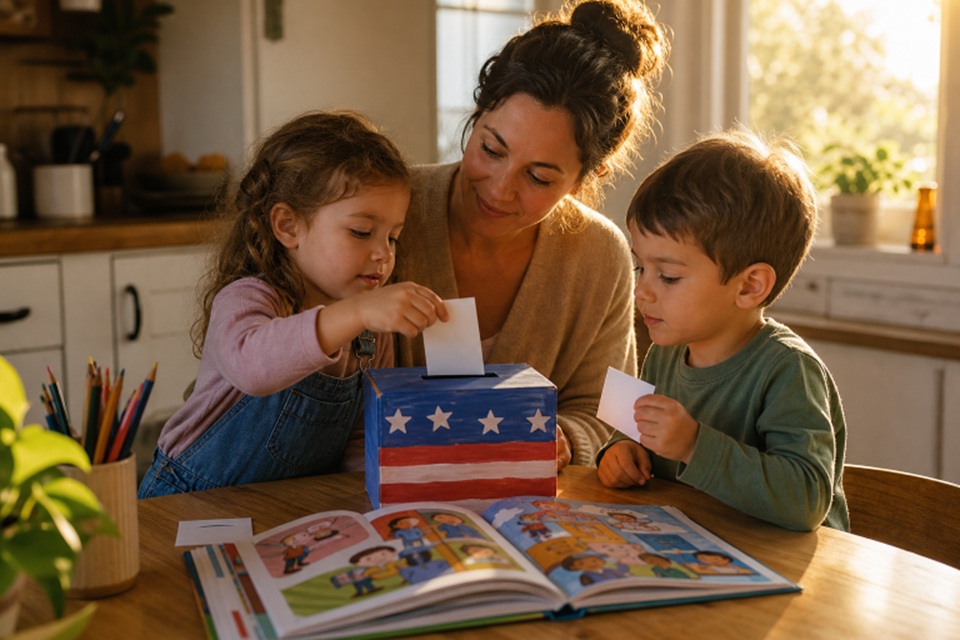
- Hold a mock vote. Let children vote on a meal, book, or class activity, then explain that real elections have formal rules.
- Add active practice. Use an iCivics activity when learners are ready for campaigns, institutions, or decision-making scenarios.
- Bring in evidence. Use a PBS KIDS video, Constitution Center lesson, or Library of Congress image to extend the conversation.
Choosing Resources With Care
Choose materials based on reading level, emotional readiness, and purpose. Preschoolers may need pictures and simple examples of fair choices, while older children may be ready for voting rights, branches of government, and primary sources. Keep the focus on civic processes rather than telling children which candidate or political side to support. For families navigating difficult questions, these age-appropriate family conversation prompts can help adults listen first and respond calmly. A connected civic learning network works because no single format has to do every job. Erika Nielsen Books provides the welcoming narrative foundation, while games, media, constitutional context, primary sources, and literacy activities build understanding over time. Children do not need to master every part of an election at once. They need a clear first conversation, trustworthy follow-up resources, and adults who make civic learning feel accessible.
Conclusion
A child-friendly approach to elections and leadership does not require exposing children to the conflicts and pressures of adult political debate. Instead, parents, teachers, librarians, and caregivers can build understanding gradually through stories, games, videos, historical materials, and age-appropriate classroom activities. Erika Nielsen Books provides an accessible narrative starting point, while iCivics, PBS KIDS, the National Constitution Center, the Library of Congress, and Scholastic offer complementary ways to strengthen civic vocabulary, critical thinking, historical awareness, and understanding of democratic processes. The most effective resources should match a child’s age, reading level, curiosity, and emotional readiness. By keeping conversations nonpartisan and emphasizing fairness, participation, respectful disagreement, and informed choices, adults can help children develop a positive and lasting foundation for civic learning.



No Comments