
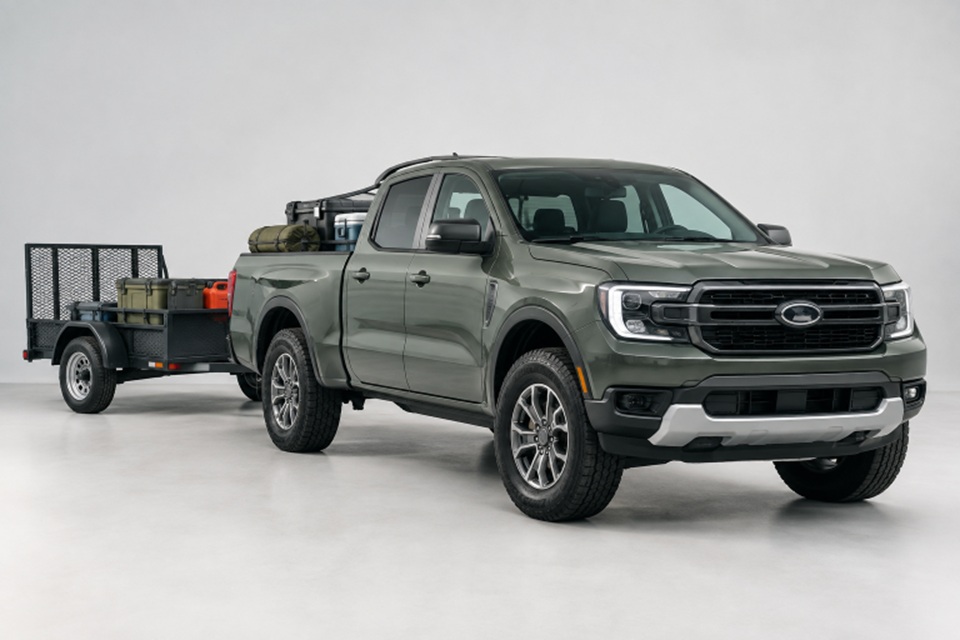
Key Takeaways:
- Buy for the work, travel, and passenger needs you actually have.
- Confirm payload, towing ratings, cab layout, bed length, and drivetrain for the truck’s exact configuration.
- Inspect title status, maintenance records, recalls, tires, frame condition, and modifications before negotiating.
- Budget for more than the purchase price, including fuel, insurance, tires, registration, repairs, and taxes.
- Use an independent pre-purchase inspection to help uncover expensive issues before paperwork is signed.
Shopping for a used pickup truck in Austin, Texas, means balancing everyday city driving with Texas-sized capability. A truck may need to fit in a downtown parking garage during the week, carry supplies across a jobsite on Friday, and handle a trailer or Hill Country road trip on the weekend. Buyers comparing lifted trucks Austin should look beyond stance, paint, and oversized tires to make sure the setup still matches their intended use.
Austin’s heat, sudden heavy rain, gravel driveways, construction zones, and long stretches of highway can all expose weak tires, tired suspension components, poor alignment, and neglected cooling systems. The smartest used-truck purchase in the Austin area is not necessarily the newest, biggest, or lowest-priced option. It is the truck with the right capability, documented care, and a realistic total cost of ownership for Central Texas conditions.
Table of Contents
Why Used Pickup Shopping Takes More Planning
Pickup trucks come in more combinations than many passenger vehicles. Compact and midsize trucks can be easier to park and less cumbersome in Austin city traffic. Half-ton trucks often suit mixed family, recreation, and light-work use. Heavy-duty models may be better for regular towing or for commercial equipment, but they can also lead to higher fuel, tire, maintenance, and insurance costs.
Engine, axle ratio, cab size, bed length, drivetrain, suspension package, and factory towing equipment can all affect what a given truck can safely do. A clean crew cab with a short bed may be ideal for passengers navigating Austin’s congested streets, while a regular cab with a longer bed may better serve materials, ladders, and equipment. Appearance should follow capability and condition, not replace them.
Step One: Define The Truck’s Main Job
Before opening listings, write down how the truck will be used during a normal month in Austin. Be specific about cargo, passengers, parking, travel distance, and trailers. This prevents paying for equipment that looks appealing but rarely provides value in Central Texas.
- Daily commuting and family use: Prioritize comfort, rear-seat access, visibility, ease of parking, and fuel economy for Austin traffic.
- Work tools and equipment: Focus on payload, bed dimensions, tie-down points, and a durable interior for jobsite use.
- Frequent towing: Verify ratings, hitch equipment, trailer brakes, cooling provisions, and stability for Hill Country terrain.
- Weekend hauling: A smaller truck may be sufficient for occasional home projects and utility trailers around Austin.
- Off-road travel: Consider ground clearance, underbody condition, traction needs, and the quality of any modifications for Texas terrain.
For example, someone who pulls a small utility trailer twice a year needs a different truck than a contractor who carries heavy tools around Austin every week. Buying only the capability you need can make ownership simpler in Austin traffic and easier on the budget.
Step Two: Match Payload & Towing Needs
Payload is the weight carried in and on the truck, including occupants, cargo, added accessories, and trailer tongue weight. Towing capacity is the weight the truck is rated to pull. Both figures depend on the exact factory configuration, so do not rely on a general model name or an online listing description.
What To verify
- Read the driver-side door labels for vehicle-specific weight information.
- Match the VIN to the engine, drivetrain, cab, bed, and factory equipment.
- Check the hitch receiver, trailer wiring, brake controller, and visible wear around towing hardware.
- Leave a sensible margin below maximum ratings rather than planning every trip at the limit.
Step Three: Compare Cab, Bed, & Drivetrain Layouts
A crew cab usually provides the best room for family members, clients, or coworkers, but its longer wheelbase can make tight Austin parking more challenging. A long bed is useful for lumber, landscaping supplies, and work equipment, while a short bed is often easier to maneuver through Austin neighborhoods. Two-wheel drive may suit pavement-focused use around the city, while four-wheel drive can be valuable on slick surfaces, rough access roads, and unpaved property in the Texas Hill Country.
Step Four: Check The Truck’s History & Title
Get the 17-character VIN before visiting the truck. Review available service records, reported accidents, mileage entries, and title branding. Look carefully for salvage, rebuilt, flood, odometer, or lien concerns. A history report is useful, but it cannot prove that a truck has never been damaged or poorly repaired.
For a private-party purchase in the Austin area, verify that the seller’s identification, title, and vehicle information agree. Texas buyers can use the state’s title history guidance to understand title issues that may affect a vehicle’s value or transfer process. Keep written records of the seller, sale date, VIN, and all signed documents.
Also, check for open safety recalls using the VIN. The federal recall lookup tool can identify unrepaired recalls associated with a specific vehicle. A recall search is quick, but it should complement, not replace, a mechanical inspection.
Step Five: Inspect Modifications With Extra Care
Modifications can be useful, especially for work, towing, or rough-road clearance in the Austin and Hill Country area, but they require closer inspection. A lift kit, larger wheels, aftermarket lighting, performance tuning, or suspension upgrades do not automatically increase value or reliability.
- Look for uneven tire wear, rubbing, leaks, loose hardware, cracked welds, and damaged boots.
- Inspect shocks, control arms, steering components, brake lines, driveshaft angles, and suspension mounts.
- Ask for receipts showing what was installed, who did the work, and whether factory parts are included.
- Be cautious when modifications make the truck difficult to steer, brake, park, enter, or insure in Texas.
Step Six: Complete A Walkaround & Purposeful Test Drive
Inspect the truck in daylight before driving it. Compare paint texture and panel gaps, examine the frame for heavy corrosion or questionable repairs, check the bed floor and tailgate, and look underneath for leaks. Test lights, windows, locks, cameras, climate controls, screens, and trailer connections.
During the test drive around Austin, start the engine cold if possible. Drive on neighborhood streets, rough pavement, hills, and highway-speed roads when practical. Listen for knocks, whines, rattles, or exhaust leaks. Confirm that acceleration is smooth, transmission shifts are predictable, brakes do not pull or vibrate, and the steering does not wander. Test four-wheel-drive modes only as specified in the owner’s manual.
Step Seven: Arrange An Independent Inspection
A qualified third-party technician in the Austin area can inspect the engine, transmission, cooling system, frame, brakes, suspension, steering, electrical systems, and evidence of prior heavy use. An inspection cannot guarantee that no repairs will ever be needed, but it can identify current concerns and provide useful information for negotiating, budgeting, or walking away.
Step Eight: Calculate The Full Ownership Cost
The asking price is only the opening number. Compare the expected loan payment, sales tax, registration, insurance, fuel, tire replacement, routine fluid and filter changes, brake work, repairs, and optional warranty costs. Larger tires, diesel components, heavy-duty parts, and modified suspension systems can make routine service more expensive in Austin.
Final Checklist Before Purchase
- VIN, title, ownership documents, and recall status reviewed
- Service records and reported history considered
- Payload, towing needs, cab, bed, and drivetrain confirmed
- Frame, tires, suspension, bed, hitch, and modifications inspected
- Purposeful test drive completed
- Independent inspection completed before signing
- All fees, financing terms, and total ownership costs reviewed
Conclusion
Buying a used pickup truck in Austin, Texas, is easier when the decision is based on evidence instead of excitement. Choose a truck that suits local Austin driving conditions, your real workload, and your repair tolerance. By checking the configuration, history, title, condition, modifications, and full budget, you can find a pickup that is ready for both Austin’s daily demands and for miles beyond the city into the Hill Country.




No Comments