
Across the globe, nations are reevaluating their defense frameworks driven by technological innovation and shifting geopolitical realities. From the rise of artificial intelligence to integrated cyber defenses, the changing nature of threats requires innovative responses. For those seeking continual updates on these quick-moving developments, intelligence updates are an invaluable resource. Understanding these evolving strategies is essential not only for policymakers but for all who are invested in global stability.
As military postures adapt, new priorities emerge. Cybersecurity, space militarization, and sustainability have shifted from niche interests to central pillars of defense agendas. Today’s defense environment is more complex and interconnected than ever before, and the strategies employed to secure national interests are evolving rapidly to meet new challenges.
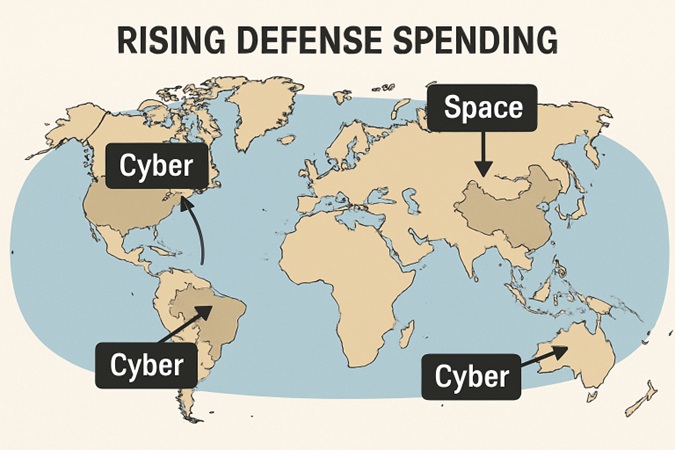
International security experts now monitor both technological and policy shifts as countries bolster cooperation to address fast-moving threats. Notably, the intensity of these efforts is driving substantial growth in defense budgets and enhancing global awareness of new operational domains, such as space. These changes shape tactics, priorities, and alliances across regions and redefine what security means in the 21st century.
Table of Contents
Increased Defense Spending
The last several years have seen marked growth in military expenditures worldwide. According to the Stockholm International Peace Research Institute, global military spending reached $2.44 trillion in 2023. The United States alone contributed $916 billion, reflecting just how central defense investment remains for world powers. This increase is not just about traditional armaments; it is a direct response to emerging strategic priorities like cybersecurity, force modernization, and advanced technology.
Other countries are following suit. Nations in Europe, Asia, and the Middle East are similarly boosting budgets in response to regional instability, technological arms races, and the increasing complexity of potential conflicts. Investing in next-generation platforms and infrastructure is critical to ensuring preparedness for both unorthodox and conventional threats.
Technological Advancements In Military Operations
Technology now permeates every level of defense operations. Artificial intelligence (AI) enhances intelligence gathering, predictive analytics, and battlefield management. Augmented reality (AR) and virtual reality (VR) are enhancing military training, mission planning, and simulation, making exercises more realistic and collaborative. As AI-driven systems become standard for intelligence, surveillance, and even autonomous drones, rapid adaptation is necessary to maintain an operational edge.
Innovation in this sphere extends to logistics, maintenance, and supply chain security. By leveraging smart platforms and predictive tools, militaries can preempt malfunctions and optimize logistics, improving readiness. The blending of human expertise and machine learning drives unprecedented efficiency and speed in defense decision-making.
Cybersecurity As A Priority
The modern battlefield now includes cyberspace, where threats can materialize instantly and invisibly. Critical infrastructure, government networks, and military systems are increasingly targeted by sophisticated cyberattacks. This reality underscores the urgency of robust cybersecurity frameworks to defend against intrusions that could compromise sensitive operations or national security.
Global defense agencies are adapting by developing comprehensive cyber defense strategies, investing in talent, and forging public-private partnerships to build digital resilience. Cyber capabilities are now as important as kinetic force, making them essential to any modern military doctrine.
Formation Of Strategic Alliances
Geopolitical tensions and transnational threats have increased the value of international alliances. Partnerships help promote intelligence sharing, enhance joint readiness, and foster collective security. A recent example is the security memorandum between the Philippines and Lithuania, which covers cooperation in the cyber and maritime domains. Historic alliances like NATO continue to adapt, expanding their focus to include cyber, space, and hybrid threats.
Strategic alliances serve not only to deter aggression but also to streamline mutual responses to crises. They facilitate joint exercises, interoperability, and a coordinated approach to unpredictable challenges that no single nation can manage alone.
Space As The New Frontier
With critical military and civilian infrastructure reliant on satellites, space has emerged as a contested and vital domain. Space situational awareness initiatives are growing rapidly as nations monitor debris, ensure satellite security, and develop protocols for space traffic management. Investments in space-based communications, reconnaissance, and propulsion highlight the dual-use nature of this frontier for both defense and commerce.
The development of anti-satellite systems, laser communication platforms, and planetary defense highlights the increasing militarization of space. International agreements and norms are needed to prevent escalation and ensure the safe, secure, and sustainable use of outer space.
Sustainability In Defense Operations
As environmental concerns intensify, defense organizations increasingly prioritize sustainability. Innovative hybrid propulsion systems, alternative fuels, and renewable energy projects are becoming standard in new developments. The U.S. Department of Defense, for example, has committed to emissions reduction programs to align with global net-zero goals.
Adopting green technologies not only reduces environmental impact but also enhances operational effectiveness by decreasing dependence on vulnerable energy supplies and increasing self-sufficiency in the field.
Conclusion
Global defense strategy and security are undergoing transformative shifts. Increased investment, rapid adoption of emerging technologies, a strong focus on cybersecurity, growing strategic alliances, and the rise of new operational domains collectively define the future of military power. Furthermore, sustainability in defense promises to make future security efforts both resilient and environmentally responsible. Keeping pace with these trends is essential for decision-makers and concerned citizens alike, as the choices made today will shape the world’s security for decades to come.





No Comments