

Key Takeaways:
- COD fuel services offer homeowners flexibility, budget control, and potentially significant cost savings.
- Proactive planning and attention to tank levels help prevent heating emergencies during the coldest months.
- Clear communication and safe access for deliveries ensure a timely, safe fuel supply all winter long.
- There are trade-offs between COD and automatic delivery programs; homeowners should weigh their needs and preferences.
Table of Contents
Understanding Cash-On-Delivery Fuel Services
Winter brings its own set of challenges, and for homeowners in colder regions, keeping the house warm is top of mind. COD fuel provides a practical solution, granting customers direct control over their heating budget by allowing payment at the time of each delivery without binding contracts. COD allows homeowners to buy heating oil or propane as needed, avoiding upfront payments or single suppliers. It offers price comparisons, flexible purchasing, online ordering, and transparent pricing. This model suits those wanting cost predictability and flexibility, especially during fluctuating fuel markets when savings of 50 to 80 cents per gallon are possible, as noted by Bacardi Oil Service.
Benefits Of COD Fuel Services
- Cost Savings: One of the central advantages of COD fuel services is the ability to capitalize on shifting market rates. With no long-term commitments, you can purchase fuel at lower prices and potentially save hundreds of dollars in a single winter.
- Flexibility: COD enables you to switch suppliers for better service or pricing at any time, offering greater control over where your fuel dollars go.
- Transparency: COD providers typically display all costs upfront so you know exactly how much you are paying before each delivery. This minimizes the risk of being surprised by hidden fees or unexplained price increases.
Planning Deliveries To Avoid Winter Emergencies
Effective winter fuel management involves proactive ordering and monitoring your tank’s fuel level, ideally when it reaches around half full to avoid emergencies during cold spells. Scheduling deliveries before major weather events or holidays can mitigate the risk of high-demand surges. Establishing a regular refill routine not only eases budgeting but also reduces stress during extreme weather conditions. However, even prepared homeowners may experience delays during peak winter demand, as evidenced by the challenges in January 2026 in Waterbury, Connecticut, where suppliers struggled to keep up with deliveries amid plummeting temperatures. Thus, early and consistent scheduling is essential to effectively navigate the complexities of winter fuel supply.
Ensuring Safe & Timely Deliveries
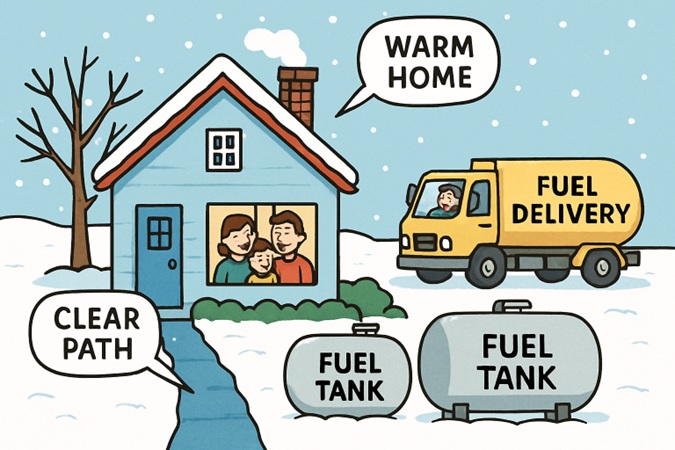
Beyond planning ahead, ensuring a clear and accessible path to your fuel tank is key to a successful delivery. Snow and ice can create hazards for both delivery drivers and the timely arrival of fuel. Regularly shoveling driveways and walkways, marking tank locations, and checking that gates or fences open freely after storms are meaningful ways to protect your family’s comfort and the safety of visiting professionals. Taking the extra step to provide safe access directly supports prompt service during busy winter periods. Additionally, keeping outdoor lighting operational can help drivers navigate safely during early-morning or evening deliveries. Inspecting the area for low-hanging branches or obstacles prevents accidental damage to vehicles and property. Finally, communicating any potential access issues to your fuel provider in advance ensures they can plan accordingly and maintain efficient service.
Comparing COD With Automatic Delivery Services
While COD provides savings and control, automatic delivery services trade some flexibility for convenience. Automated programs monitor your fuel usage and schedule deliveries based on predicted demand. This is convenient for those who prefer to set it and forget it, but it usually requires signing a service contract and can lock you into a set price that might not reflect the lowest available rate. In contrast, COD lets you monitor pricing and switch providers, but it requires you to track your fuel levels and plan deliveries.
Homeowners should compare the pros and cons of each option, considering personal schedules, budget priorities, and appetite for involvement, to decide which winter heating strategy best fits their lifestyle.
Conclusion
Cash-On-Delivery fuel services are a strong choice for those seeking control and flexibility during winter. With regular monitoring, proactive scheduling, and efforts to enhance delivery safety, families can maximize savings and sustainability while avoiding seasonal heating emergencies. The autonomy and savings made possible by COD fuel help make winter warmth easier to manage.





No Comments