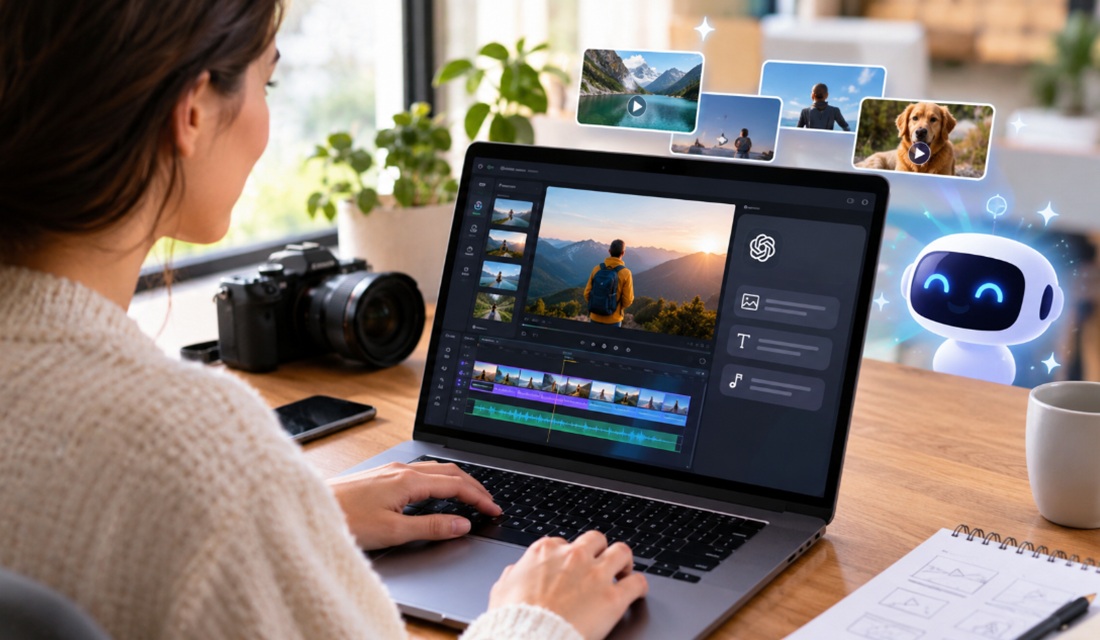
Video creation demands many skills. Creators have to record many things. AI is changing this process. Many editing tools can now handle routine tasks in a few clicks. Some can remove silence, create captions, find useful clips, and resize videos.
Table of Contents
AI Makes The First Edit Faster
Your first step could be editing. The most time-consuming part of video production is editing. Creators spend a lot of time on one video. They must find useful moments and remove weak parts. AI can speed up this work. It can scan footage and help identify sections that may be useful. Some tools can also detect silence and filler words.
Steps Of Video Editing:
These included
- Recording footage,
- Sorting clips,
- Editing scenes,
- Cleaning audio,
- Adding captions,
Preparing different versions for each platform. Even a short video could take a long time to finish.
Editing Through Text Is Becoming More Common
AI has introduced another approach. Some tools turn spoken video into a transcript. The creator can then edit the text. AI can help with these early tasks. It can suggest different angles for a topic. It can turn rough notes into an outline. It can also help simplify a script or create questions for an interview. It cannot fully replace creative judgment.
ChatGPT & Natural-Language Video Workflows
For example, recent editing workflows allow users to give instructions in plain language for tasks such as organizing media, making cuts, or preparing exports. A ChatGPT video editor workflow can also be useful when creators want to connect planning with production. The important point is that AI works best as an assistant. Human review is still needed before a video is published.
AI Is Improving Captions & Subtitles
Captions are now an important part of online video. Some tools can detect speakers and divide dialogue into sections. Creators can then check the text and correct mistakes. Translation is another growing use. AI can help prepare subtitles in several languages. This can make one video useful for a wider audience without creating every subtitle file from scratch.
Turning Long Videos Into Short Clips
Creators often publish the same content in several formats. A long podcast may become a YouTube video, a short clip, and several vertical posts. AI can help find possible highlights from long recordings. It can look for strong moments and create shorter clips around them. Some tools also help with vertical framing and captions. This can reduce repetitive work. The creator can review the suggested clips and choose which ones fit the audience.
AI Helps With Visual Creation
AI is not limited to editing existing footage. It can also help creators produce new visual material. A creator may need a simple background, an illustration, or extra footage for a scene. Generative AI can help create these assets from descriptions. This can be useful when original footage is unavailable. Still, generated visuals need review. AI-created scenes can contain strange details or visual errors. Creators should check every asset before using it in a finished project.
AI Helps Creators Adapt Videos For Different Platforms
A single video may need several versions. YouTube often uses a wide format. Short-form platforms commonly use vertical video. AI tools can help reframe footage for different screen sizes. They may also track the main speaker or subject when changing the frame. This makes repurposing easier. The creator still needs to check the final framing.
Final Thoughts
Some can also detect pauses or filler words. This saves creators from making many small audio adjustments manually. Human listening is still important. A tool may remove a sound that is actually part of the scene. A quick review can prevent these mistakes.




No Comments