
Key Takeaways:
- Hard water contains high levels of minerals, such as calcium and magnesium, which can impact various aspects of daily life.
- Common signs include limescale buildup, reduced soap effectiveness, and skin irritation.
- Solutions range from water softeners to regular appliance and plumbing maintenance.
Table of Contents
Understanding Hard Water
Hard water is a common issue in many households, especially in regions where groundwater passes through mineral-rich environments. It is characterized by elevated mineral concentrations, primarily calcium and magnesium. As water travels through limestone and chalk deposits, it naturally dissolves these minerals, resulting in hard water that flows from your taps. Although hard water is not a health risk, its impact on daily routines can be substantial. In Florida, where well water is prevalent, managing mineral content is a frequent concern. Many residents seek hard water treatment Tampa to address this challenge and improve home water quality.
The effects of hard water go beyond just its taste or appearance. Over time, mineral accumulation can manifest in various ways around the house. The stubborn buildup on showerheads and faucets, persistent soap residue in the bathroom, and even that dull, heavy feeling in your freshly washed hair – all point to water hardness. These symptoms can be irritating, causing frustration for homeowners as cleaning and maintenance become more demanding.
While some people notice these issues right away, others may only recognize them when appliances start to fail or laundry becomes less vibrant. Recognizing the signs and taking action is essential, not only for convenience but also to extend the lifespan of your household systems. Household appliances like dishwashers, water heaters, and washing machines are particularly vulnerable to mineral buildup, which often leads to efficiency loss and eventual breakdown.
If left untreated, hard water can even restrict water flow through pipes as minerals gradually form deposits inside plumbing. This can lead to persistent low water pressure and increased risk for costly plumbing repairs. Over time, these cumulative effects underscore why understanding and addressing hard water is so essential for homeowners.
Common Signs Of Hard Water
Recognizing hard water symptoms early can prevent larger issues down the line. Here are some common signs:
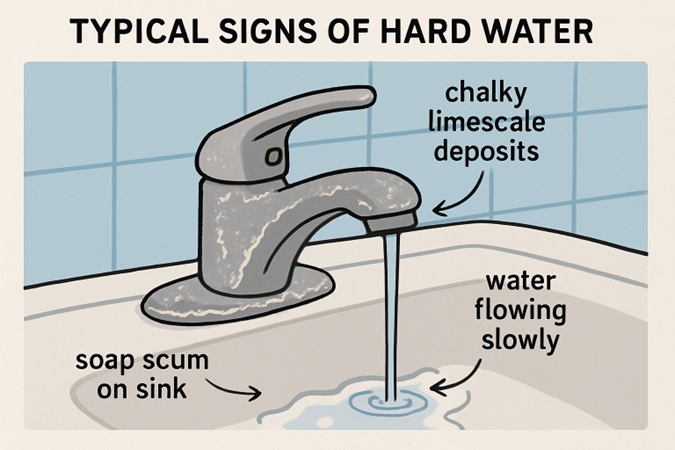
- Limescale Buildup: Noticeable white, chalky deposits form on faucets, showerheads, and inside household appliances. These mineral traces are not only unsightly but can also impede appliance function.
- Soap Scum: Minerals in hard water interact with soap, forming a film that lingers on skin, hair, and bathroom surfaces. This residue can make cleaning more difficult and leave you feeling less refreshed after showering.
- Reduced Water Pressure: Mineral accumulation within pipes reduces the internal diameter, slowing water flow in affected fixtures.
- Stiff and Faded Laundry: Clothes washed in hard water may come out stiff and faded, as mineral deposits adhere to the fabric fibers.
- Dry Skin and Hair: Hard water can strip away natural oils, contributing to dryness, itchiness, and irritation.
Impact On Household Appliances & Plumbing
Household systems experience significant wear and tear due to hard water minerals. Water heaters, one of the costliest appliances to replace, often lose efficiency as limescale builds up at the bottom of the tank. The heating element must work harder to achieve proper water temperatures, resulting in higher energy bills and eventual system breakdowns. Dishwashers and washing machines face similar problems; their mechanical parts become less effective, requiring more frequent repairs or replacements.
Plumbing is also at risk. Even a small accumulation of minerals in pipes can lead to significant blockages over time. This not only reduces water pressure but also increases the risk of corrosion, leaks, and pipe failure. According to experts, homeowners in hard water regions often face higher maintenance costs and shorter appliance lifespans. Regular attention to these systems is essential for sustained functioning and household efficiency.
Effects On Personal Care
Hard water can also take a toll on daily personal care routines. One of the most noticeable impacts is skin irritation. Residual soap scum that remains after washing may cause dryness, particularly for those with sensitive skin or pre-existing conditions such as eczema. People with hard water at home commonly experience tighter, itchier skin after bathing.
Similarly, hair can become dull, brittle, and more challenging to manage. The minerals in hard water coat each hair strand, leaving hair feeling heavier and lacking luster. In some cases, the buildup can even prevent proper cleaning, making shampoos and conditioners less effective and leaving hair prone to tangling and breakage.
Solutions To Hard Water Problems
There are several effective ways to combat hard water in the home. Water softeners are a popular solution; these devices use ion exchange to remove calcium and magnesium from household water supplies. By replacing hard minerals with sodium or potassium ions, these systems can significantly reduce water hardness and improve daily water quality.
In addition to whole-house softeners, regular maintenance is crucial. Regularly descaling appliances and cleaning affected fixtures helps prevent mineral buildup. Homeowners should also consider installing shower filters, which reduce the mineral content of water before it reaches their skin and hair.
Experts recommend regularly assessing your home’s water, especially if you move to a new area or notice changes in cleaning effectiveness, appliance performance, or skin and hair health. A professional assessment or water test kit can help identify problem areas and guide you toward the right solution.
Scientific Perspective On Hard Water
From a scientific standpoint, hard water’s primary concern is its impact on systems and comfort, not health. According to the U.S. Geological Survey, hard water poses no direct health risks. However, studies have found an increased prevalence of eczema among children living in hard-water areas and reported upticks in appliance energy use and maintenance costs among affected households. Research from the National Institutes of Health also notes that persistent use of hard water can exacerbate certain dermatological conditions, especially in sensitive individuals.
Conclusion
Spotting the signs of hard water early and taking action can improve both household efficiency and personal comfort. Solutions such as water softeners, routine maintenance, and filter installation can significantly reduce the challenges posed by hard water. By protecting your plumbing and appliances and enhancing personal care outcomes, these measures offer real value to anyone living in a hard-water region. Stay vigilant and proactive to keep your home running smoothly and to optimize your well-being, regardless of what flows from your tap.




No Comments