
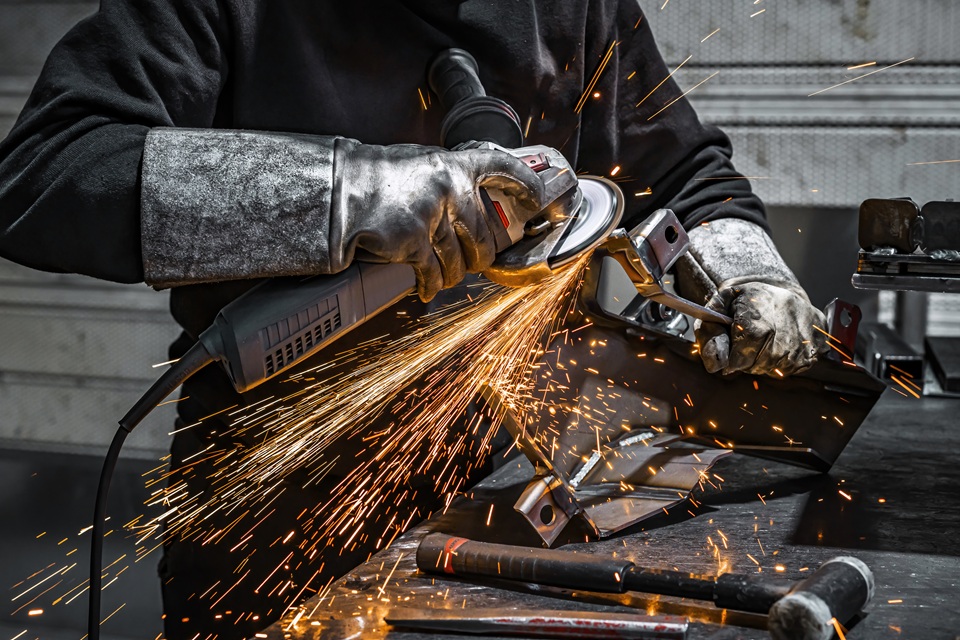
Industrial facilities in and around Lufkin, Texas, depend on equipment that can withstand heat, moisture, vibration, heavy loads, and continuous use. When a bracket cracks, a guard bends, or a pipe support begins to loosen, a small metal problem can quickly interfere with safe, reliable operation. Thoughtful fabrication & welding planning helps maintenance teams address those concerns before an emergency shutdown becomes the only option.
Planning does not mean every worn component must be replaced immediately. It means gathering enough information to decide whether a repair is appropriate, how the work should be performed, and how the finished part will be checked before it returns to service. This approach can make scheduled maintenance more predictable while reducing rushed decisions during a breakdown.
Table of Contents
Why Downtime Often Starts With Small Metal Problems
Many equipment failures develop gradually. A crack near a weld, a corroded mounting plate, or a distorted support can change the way a component carries weight or responds to vibration. For example, a cracked pipe support may allow a connected section to shift. That movement can place added stress on joints, fasteners, or nearby equipment.
In East Texas, outdoor equipment may also face rain, humidity, temperature changes, and exposure to process materials. These conditions can accelerate corrosion or reveal weak areas that were not obvious during normal operation. Identifying defects while equipment is still operating gives teams more time to plan access, materials, isolation procedures, and inspection steps.
Early Warning Signs That Need Attention
Maintenance personnel should record changes rather than relying on memory or waiting for a visible failure. When a damaged component requires machining, fitting, or dimensional correction in addition to welding, coordinating with a machine shop can help define the scope of repair before work begins.
- New cracks around welds, corners, bolt holes, lifting points, and other high-stress areas.
- Rust, pitting, thinning metal, flaking coatings, or recurring leaks.
- Unusual vibration, noise, heat, movement, or alignment changes.
- Loose braces, bent guards, damaged mounting plates, or missing fasteners.
- Repeated repairs in the same location, which can indicate that the underlying cause has not been corrected.
When To Repair & When To Replace
Welding is not the right answer for every damaged part. A repair should restore an appropriate level of function without creating a new weakness or concealing the reason the part failed. The decision should consider the component’s role, condition, and operating environment.
- Identify the base material and the component’s original purpose.
- Measure the defect’s location, length, depth, and proximity to holes, bends, or previous welds.
- Review loads, temperatures, chemical exposure, vibration, and movement during operation.
- Compare the expected service life of a repair with the time and cost required to fabricate a replacement.
- Confirm that the repaired component can be inspected, tested, and safely reinstalled.
A part that has thinned extensively from corrosion, has failed repeatedly, or cannot be safely accessed for a sound repair may be a better candidate for replacement. When possible, the repair plan should address causes such as poor support, misalignment, abrasion, water retention, or excessive vibration.
A Simple Planning Process For Welding & Fabrication Work
A clear work plan improves communication between operations, maintenance, and the people completing the repair. Start by collecting photographs, measurements, drawings, operating details, and notes about prior failures. These details help determine whether the work belongs in a controlled shop setting or must be completed at the equipment site.
- Define the work limits: Identify what will be removed, repaired, fabricated, or protected during the job.
- Choose suitable methods: Match the welding process, filler metal, cutting method, joint design, and finishing work to the material and service conditions.
- Plan access and positioning: Confirm that workers can reach the area safely and that the part can be held in proper alignment.
- Prepare the area: Remove contamination, isolate energy sources, and protect adjacent components from sparks, heat, and debris.
- Schedule verification: Include fit-up checks, weld inspection, dimensional checks, and operational testing before release.
How Material Choice Affects Results
Carbon steel, stainless steel, and aluminum respond differently to heat, contamination, and welding methods. Thickness also matters. Thin material may distort more easily, while thicker sections can require more careful heat control and preparation. Using an incompatible filler metal or overlooking surface contamination can weaken a repair or create a poor finish.
Dissimilar metals require additional attention because they may react differently to temperature and corrosion. The environment matters as well. A component exposed to moisture, chemicals, repeated movement, or elevated temperature may need a different material, joint design, coating, or support arrangement than a similar-looking part used indoors.
Quality Checks That Prevent Repeat Failures
Before equipment returns to service, the repair should be checked against the job requirements. Visual inspection can identify obvious issues such as cracks, undercut, porosity, incomplete fusion, or sharp edges. Dimensions, mounting points, fastener locations, and contact surfaces should also be verified against available drawings or the original fit.
For critical components, non-destructive testing methods can evaluate a material or weld without permanently damaging the item being examined. The appropriate method depends on the part, suspected defect, service conditions, and inspection requirements.
- Document the repair date, material used, measurements, and inspection results.
- Inspect nearby brackets, supports, fasteners, and surrounding metal for related damage.
- Record recurring defects so maintenance teams can identify patterns over time.
Safety Steps For Hot Work
Welding, cutting, grinding, and brazing require a deliberate hot-work process. Hot-work hazards include fire, explosion, arc exposure, and welding fumes, particularly when equipment may contain combustible residue or when vapors can collect in enclosed areas.
- Use required permits, hazard reviews, equipment isolation, and lockout procedures.
- Remove or shield combustible materials and confirm that tanks, lines, and vessels are properly isolated.
- Inspect leads, hoses, regulators, grounds, gas cylinders, and power sources before starting work.
- Provide suitable ventilation, fire-watch procedures, and eye, face, hand, foot, and body protection.
Where New Technology Fits In
Digital drawings, job photos, measurement tools, and maintenance records can make fabrication work easier to plan and repeat. CNC cutting and well-designed fixtures can improve consistency in regularly produced parts. Automated welding may also be useful when the same work is performed repeatedly under controlled conditions.
Technology supports good decisions, but it does not replace careful preparation, correct material selection, skilled setup, or inspection. The most useful tool is often accurate information about what failed, why it failed, and what the repaired component must handle after installation.
Common Questions About Industrial Welding & Fabrication
How early should a metal defect be repaired?The timing depends on the defect’s size, location, load, and role in the equipment. A crack in a lifting point, pressure-related component, or structural support generally requires more urgent evaluation than damage to a non-critical cover.
Can every cracked part be welded?No. The material, crack cause, thickness, accessibility, operating conditions, and remaining condition of the part must be reviewed first.
Is shop work better than on-site work?Shop work may provide better access, tooling, and controlled conditions. On-site work may be practical when a component is large, fixed in place, or difficult to transport.
What information helps define a repair?Clear photos, dimensions, material details, equipment drawings, operating conditions, a description of the failure, and site-access limits can all help create a more accurate work plan.
Final Takeaway
For industrial operations in Lufkin, smart welding and fabrication planning begins long before sparks fly. Early inspections, sound repair-versus-replacement decisions, suitable materials, safe hot-work controls, and documented quality checks can reduce uncertainty when equipment needs attention. The strongest plan is not necessarily the most complex one. It is the plan that fits the component, its operating environment, and the level of reliability the work requires.



No Comments